Overloaded Power Points: What It Means and What to Do
Nobody sets out to overload a power point. It happens because the house has fewer sockets than the household has things to plug into them.
Here's what that does to a socket and the cable feeding it, and how it gets put right. Call (02) 9538 7444 if yours is running warm.
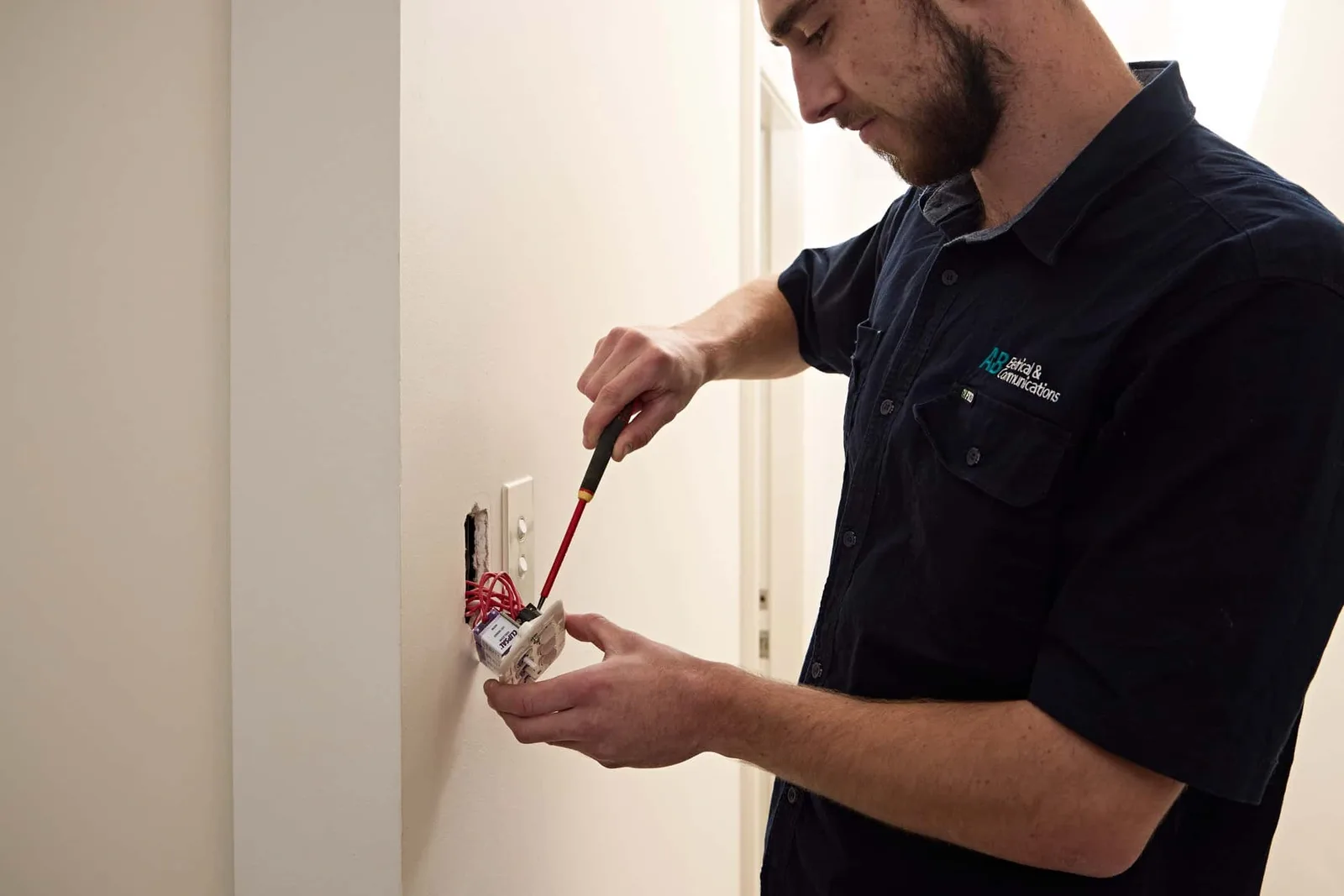
Overloaded Power Points, Explained in Plain English
A power point isn't just a hole in the wall. It's a rated connection, and that rating is a heat limit rather than a suggestion.
Pull more through it than the rating allows and the extra energy doesn't disappear. It shows up as warmth in the contacts, the faceplate, and the cable running back behind the plaster.
Warmth is the whole problem. Plastic that gets hot over and over goes brittle, contacts lose their spring, and a loosened contact runs hotter again the next time.
So this is a slow fault rather than a dramatic one. The failure usually arrives years after the habit that caused it set in.
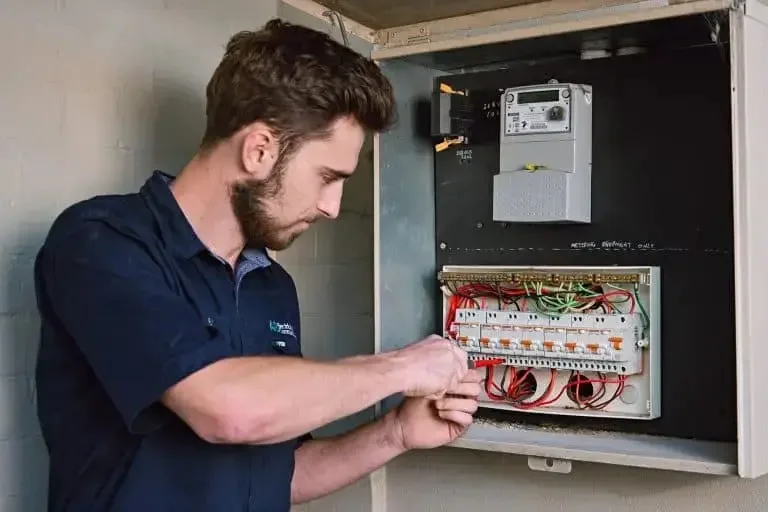
When Overloaded Power Points Are Urgent
Heat is what makes this urgent, and the back of your hand is enough to check for it.
Faceplate cool, with a board of chargers and a lamp hanging off it? That's a standard booking, not a panic.
Warm plate, a smell of hot plastic, brown staining creeping out from the edges, or a plug gone slack in the socket? Switch the circuit off at the board and ring us.
One more worth acting on: a breaker that only lets go when several appliances run at once. That's the circuit telling you the truth about its rating.
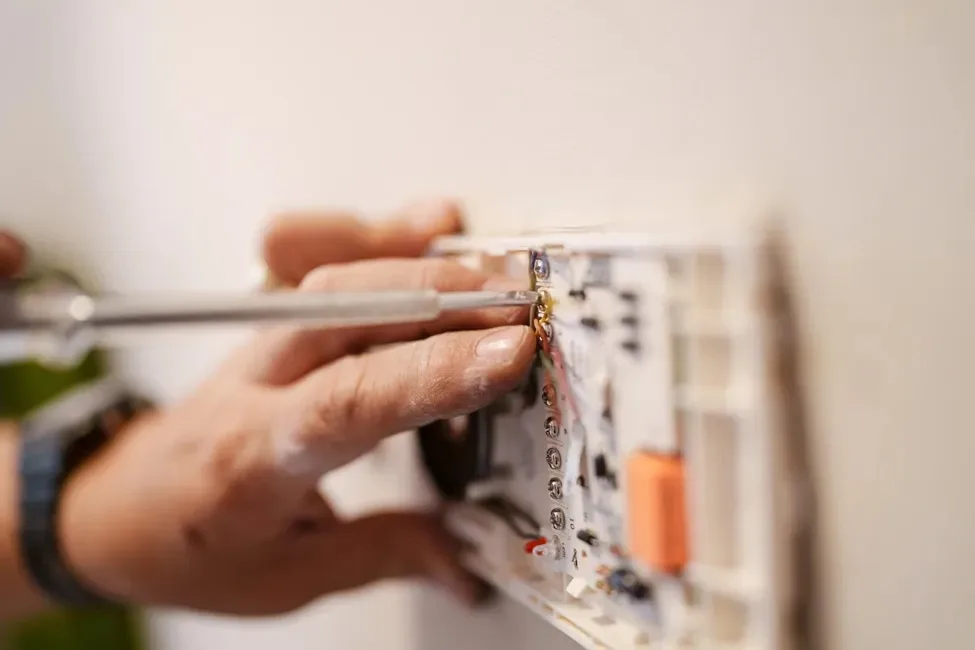
Common Causes of Overloaded Power Points
Nearly all of it traces back to one mismatch: the number of sockets the house was built with against the number of things you own.
- Too few points for the way the room is actually used. This sits underneath most of the others, and fixing it fixes them.
- Boards feeding boards. Chaining them multiplies the sockets without adding a single amp of capacity.
- The heavy appliances sharing one point. Heaters, kettles and hair dryers each pull serious current, and they rarely run one at a time.
- A point that's already degraded. Worn contacts run hotter than healthy ones under exactly the same load.
- Extension leads that quietly became permanent. They're built to get you through a job, not to stand in for a socket that should have been installed.
- No idea what else is on the circuit. Several points around a room often share one, so the load adds up out of sight.
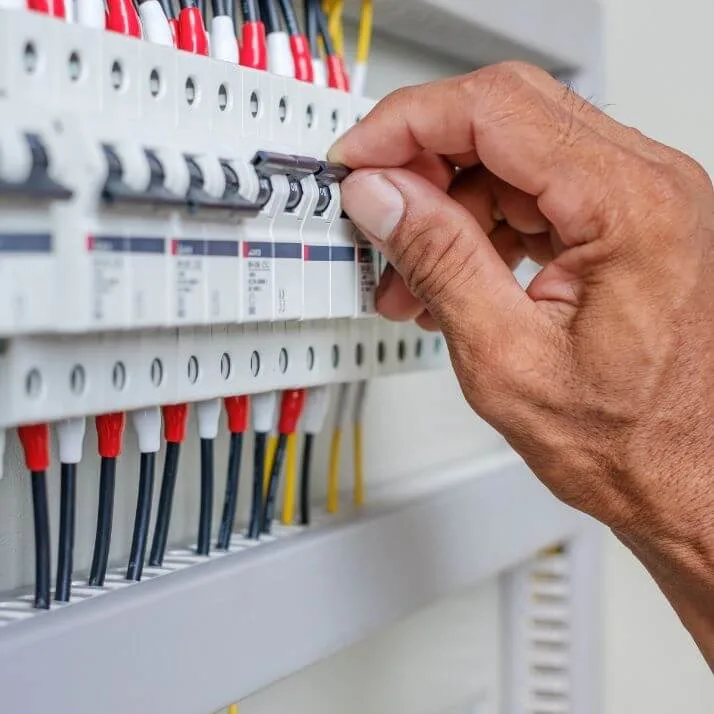
Do This First
Unplug everything from the affected point. This stops any further heat build-up immediately.
Spread devices across other points in the room. Move some load onto a circuit you know isn't already stretched.
Call us if you've noticed any warning signs. Heat, smell or discolouration means don't plug anything back in until it's checked.
How We Fix the Fault for Good
We assess the load actually being asked of the circuit, not just the point itself, since the real fix depends on what's really going on behind the wall.
Sometimes the answer is a straightforward point replacement. Other times it's adding points elsewhere to spread the load properly, or upgrading the circuit that's carrying too much.
We put whichever fix applies in writing before starting, so there are no surprises on the invoice.
Our lifetime workmanship guarantee sits behind the work, so a point that plays up again through a fault in our fix gets sorted at no cost.
Every job follows the AS/NZS 3000 wiring rules, and notifiable work is certified once it's tested.
Prevention Beats Repair
A handful of habits stop this recurring, and none of them require major work.
- Get extra points installed wherever a board has become permanent furniture
- Keep high-draw appliances on separate points and circuits where possible
- Avoid daisy-chaining boards, and replace worn extension leads
- Get any point showing warmth looked at before you plug anything back in
- Consider a broader power point upgrade if multiple rooms are consistently stretched
A power points upgrade adds proper capacity where you actually need it, and a wider circuit review sits under switchboard upgrades.
Why This Is Common in Annandale Homes
A lot of the overloaded points we see around Annandale Street and the surrounding cottage streets come down to a simple mismatch. These are pre-1940 workers' cottages, wired long before a household owned anything like today's spread of appliances.
Add a modern household's worth of chargers, appliances and entertainment gear to that original layout, and a single point ends up carrying far more than it was ever meant to.
It's less a fault and more a design gap between what the house was built for and how it's actually lived in today.
The honest fix in most of these homes isn't a warning sticker on the power board, it's adding proper points where the load actually sits.
The Power Board Myth
A common belief is that fitting a surge-protected board with its own switch makes overloading safe.
It doesn't. A power board only manages the connection between the plugs and the point, not the amount of current actually flowing through the wall behind it.
Stack enough devices on a "safe" power board, and the point and the wiring feeding it still carry every bit as much load as if there were no board at all.
The surge protection some boards include guards against voltage spikes, not against sustained overload from too many devices drawing current at once. They're two entirely different problems, and one doesn't protect against the other.
Related Faults and Surrounding Areas
An overloaded point sometimes shares the stage with a burnt outlet or lights that flicker when heavy appliances kick in nearby.
We handle these calls throughout Annandale and just as often across Stanmore, Camperdown and Leichhardt.

Call Us Today, We Will Sort It
An overloaded point won't fix itself by unplugging things occasionally. Ring (02) 9538 7444 and let's put a lasting solution in place.
Common questions
Overloaded Power Points FAQs
A few plain answers before you unplug anything else in frustration.
Can I fix it myself?
No. Adding or altering power points is licensed electrical work under NSW law, regardless of how simple it looks.
How do you find the fault?
We check the load on the circuit, the condition of the points themselves, and the wiring behind them before recommending anything.
Why does it only happen when several appliances run?
That's the clearest sign of overload. Individually each appliance is fine, but together they exceed what the circuit was built to carry.
Is an overloaded power point an emergency?
Not always, but heat, discolouration or a burning smell at the point moves it into urgent territory straight away.
Can I keep using the circuit while I wait?
Reduce the load in the meantime. Unplug what you can and avoid running several high-draw appliances on it together until it's checked.
Can an overloaded power point cause a fire?
Yes, sustained overload generates heat that can damage the point and the wiring behind it. That's exactly why the warning signs matter.